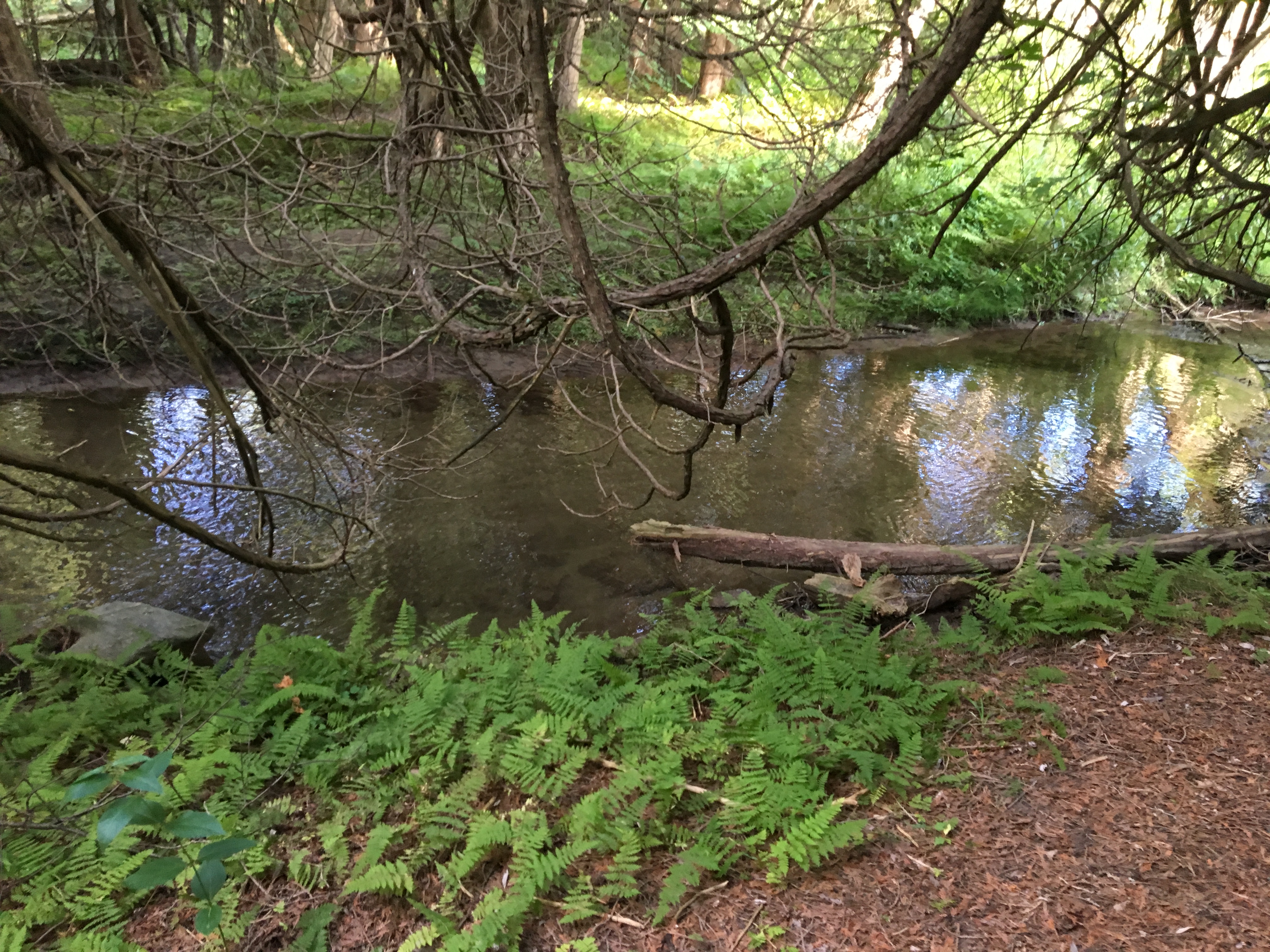
What counts as a riparian zone
A riparian zone is the band of land directly beside a stream, river, pond, or wetland, where soil moisture and the presence of water shape which plants grow. It is the transition between fully aquatic conditions in the channel and the drier ground beyond. In a Canadian creek valley, that often means a mix of water-tolerant trees such as willow and alder, dense shrubs, sedges, and grasses with deep, binding roots.
The width varies. A small forest creek might have only a few metres of vegetated edge, while a larger river can support a wide floodplain forest. What matters is continuity: an unbroken green corridor does far more than scattered patches.
Four quiet jobs it does
Riparian vegetation works on the stream from several directions at once.
- Shade. Overhanging branches keep water cooler in summer, which matters for cold-water species and for dissolved oxygen.
- Bank strength. Roots bind soil and slow erosion, so the channel holds its shape instead of widening and filling with sediment.
- Filtering. When rain runs off nearby land, the vegetated edge slows it, letting soil and roots trap sediment and take up some nutrients before the water reaches the creek.
- Habitat. Leaf litter and fallen wood feed stream insects, and the corridor itself offers cover and travel routes for birds, amphibians, and mammals.
Fallen wood is not a mess
Branches and logs that drop into a creek create pools, trap gravel, and give fish and insects places to shelter. Clearing all woody material from a small stream usually removes habitat rather than improving it.
Reading a healthy edge
A few signs suggest a riparian zone is doing its job. Banks are held together by living roots rather than crumbling into the water. Plant cover is layered, with tall trees, mid-height shrubs, and low ground plants rather than a single mown strip. Native species dominate, and the corridor runs continuously along the bank instead of breaking into bare gaps.
Where edges break down
Riparian zones thin out where land use pushes right to the water: mown lawns to the bank, cleared shorelines, livestock access, or hardened edges. The result is often warmer water, faster erosion, and more sediment and nutrients reaching the channel. Re-establishing a vegetated buffer is one of the most direct ways to improve a small stream.
Bringing it together
If a stream's shape is set by gradient and flow, its day-to-day health is guarded at the edge. Protecting and restoring riparian vegetation links naturally to the everyday choices people make across a watershed.